





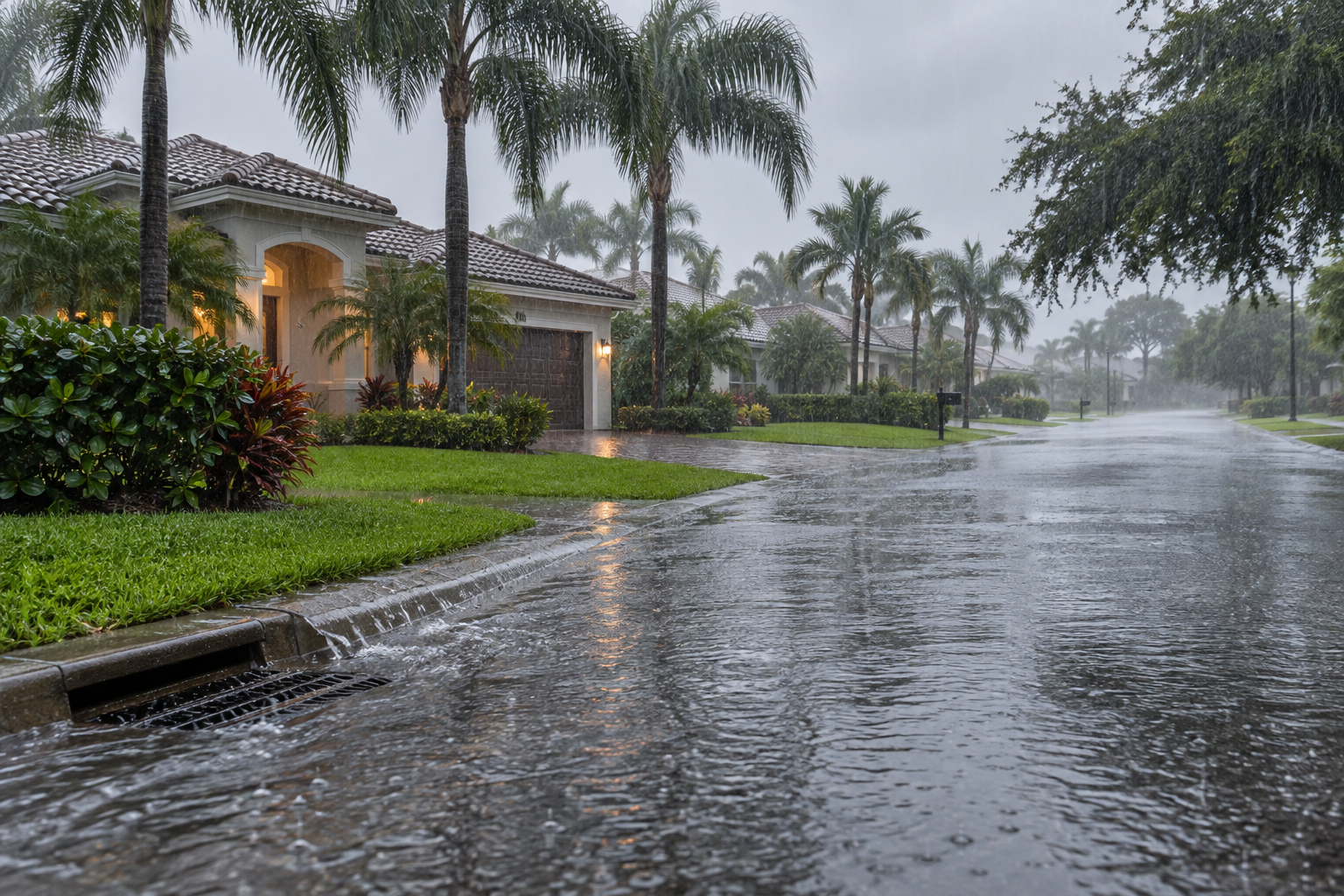
South Florida homeowners are no strangers to sudden downpours. One minute the sky is clear, and the next, rain is coming down hard enough to leave streets, yards, and drainage areas covered with water.
Most people think about their roof, windows, or yard when preparing for heavy rain. Your plumbing and sewer lines, however, deserve attention too.
Heavy rainfall can put additional pressure on drainage infrastructure and expose problems that may already be developing underground. A partially blocked drain, damaged sewer line, or pipe that works normally during dry weather can suddenly become much more noticeable after a major downpour.
Understanding heavy rain plumbing problems can help you recognize warning signs early and know when it is time to bring in a professional plumber.
Why Heavy Rain Can Cause Plumbing Problems
Rainwater is not supposed to simply pour into your home’s sanitary plumbing system. However, wet weather can still affect sewer infrastructure.
The U.S. Environmental Protection Agency explains that groundwater and storm water can enter sanitary sewer systems through defects and contribute to excessive flows. During wet weather, this inflow and infiltration can increase the likelihood of sewer overflows and even sewage backups into buildings.
Homeowners may also have problems with the sewer lateral, which is the pipe connecting a house to the larger sewer system. FEMA explains in its urban flooding guidance for homeowners that heavy rainfall, flooding, or blockages can contribute to sewage backing up through plumbing fixtures.
The effects can be especially noticeable when a home’s sewer line already has a blockage, crack, root intrusion, poor connection, or another defect.
That is why plumbing trouble that suddenly appears after a storm should not automatically be dismissed as a temporary inconvenience.
Heavy Rain Can Contribute to Sewer Backups
One of the most unpleasant problems homeowners may encounter following intense rainfall is a sewer backup.
When wastewater cannot move through the sewer line properly, it can begin moving in the wrong direction. You might first notice water coming up through a shower or tub drain. In more serious situations, toilets, sinks, or floor drains can become affected.
The EPA notes that sanitary sewer overflows can back up into homes, resulting in property damage and potential public health concerns. It identifies blockages, broken lines, pipe defects that allow groundwater or storm water into the system, and other infrastructure problems as possible causes of sanitary sewer overflows.
A sewer backup should therefore be treated differently from an ordinary slow drain.
If multiple fixtures are backing up at once, sewage is visible, or strong sewer odors suddenly appear in the house, it may indicate a larger drainage or sewer-line problem.
Plumbing Experts provides emergency drain service for problems including overflowing drains, sewage entering a home, multiple fixtures backing up, and main-line blockages.
Existing Sewer Line Damage May Become More Noticeable
Heavy rain does not necessarily create every sewer problem from scratch. Sometimes it exposes a problem that has been developing for months or even years.
Underground sewer pipes can experience cracks, collapsed sections, misaligned connections, root intrusion, deterioration, and blockages. Plumbing Experts also identify excessive rainwater and storm water flooding as potential factors associated with sewer-line failures.
During normal weather, wastewater may still be able to move through a compromised pipe. After significant rainfall, however, wet conditions can make existing drainage problems more apparent.
Homeowners may notice repeated backups, unusually slow drains, sewage odors, or unusual wet areas outside.
The difficult part is that you cannot see most of the sewer line from inside your home. Guessing at the location of an underground problem can lead to unnecessary disruption.
This is where a professional inspection becomes valuable.
A Sewer Camera Can Find Hidden Problems
When plumbing trouble repeatedly appears after storms, there may be something happening inside the sewer line that cannot be diagnosed from the surface.
Plumbing Experts offers sewer camera inspection services that allow technicians to examine the inside of a sewer pipe. A specialized camera is fed into the line so the condition of the pipe can be viewed and the location of certain problems identified.
A camera inspection may reveal issues such as tree roots, foreign objects, cracked pipes, collapsed sections, misaligned pipes, bad fittings, or stoppages.
This can make a major difference when determining the next step.
Instead of assuming an entire sewer line needs extensive work, technicians can gather information about what is actually happening underground and where the trouble is located.
Heavy Rain May Make Slow or Clogged Drains Worse
A sink that has been draining a little slowly for weeks may seem like a minor annoyance. After heavy rain, however, drainage trouble can become harder to ignore, particularly if the restriction involves the main sewer line.
Pay attention when several drains begin acting strangely at the same time.
For example, you might flush the toilet and notice water appearing in the shower. The bathtub might drain much more slowly than usual, or you may hear gurgling sounds from nearby fixtures.
Those symptoms can point toward a problem farther down the drainage system rather than a simple blockage immediately below one fixture.
Plumbing Experts provides professional clog and stoppage services and uses equipment such as drain tools, sewer cameras, and high-powered water jets when appropriate.
Repeated clogs should not simply become part of your normal household routine. Finding the underlying cause may help prevent a more disruptive backup later.
Saturated Ground Can Reveal Underground Plumbing Issues
South Florida soil can become heavily saturated during prolonged or intense rainfall. While underground pipes are designed to operate below the surface, damaged plumbing lines can become more troublesome when surrounding conditions are extremely wet.
A cracked or compromised sewer pipe may already have structural problems. Water entering where it should not can add to drainage concerns, while damaged pipes can allow wastewater to escape into surrounding areas.
Homeowners should pay attention to unusual changes outside after a storm.
Persistent soggy areas, foul smells, unexplained depressions in the ground, or wastewater near drains should not be ignored. Not every wet patch indicates a sewer problem after heavy rain, but unusual conditions that remain after surrounding areas begin drying deserve further investigation.
Watch for Signs of Trouble After a South Florida Storm
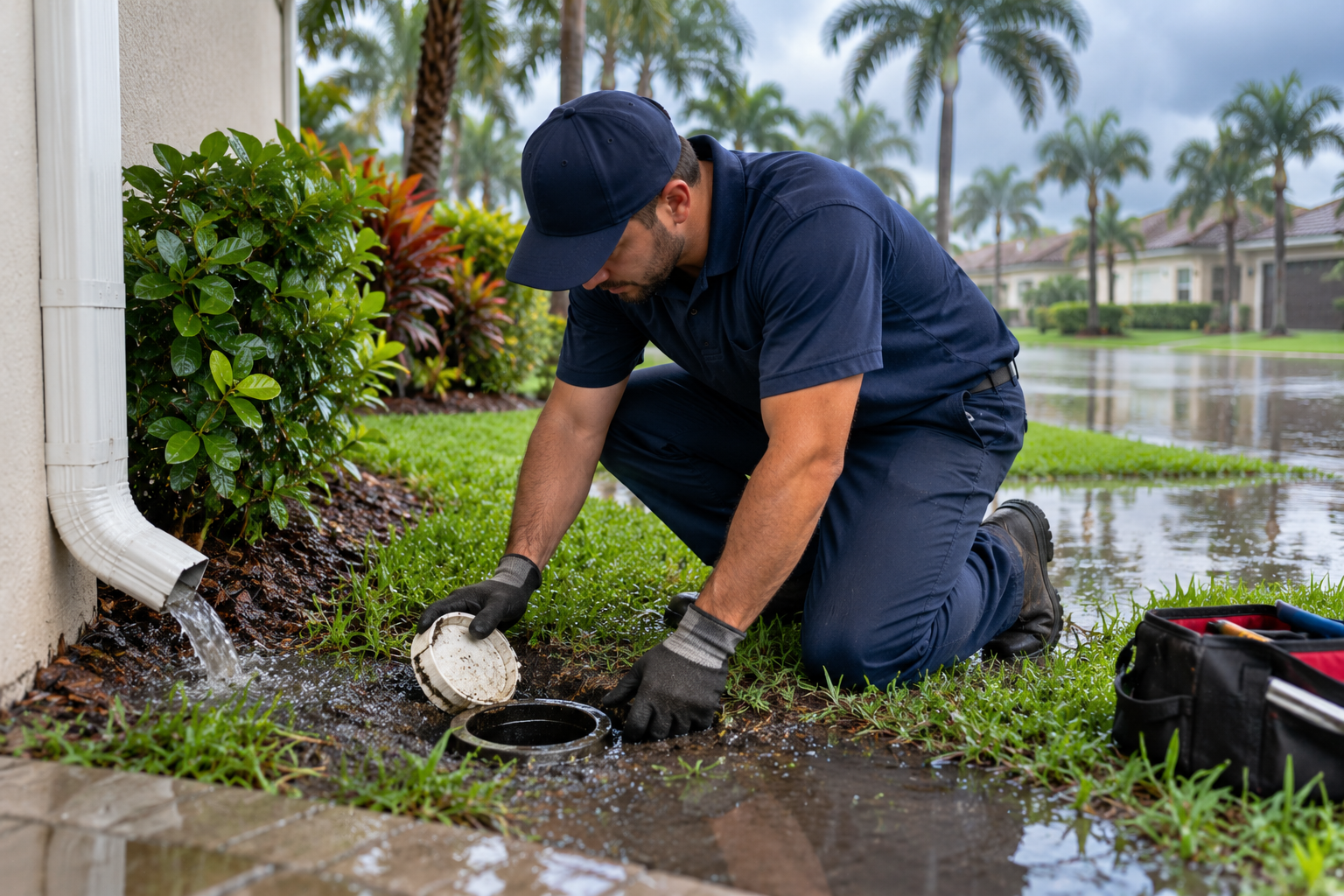
You do not need to inspect every pipe after an afternoon thunderstorm. Instead, pay attention to changes in how your plumbing behaves.
Some of the most important warning signs include multiple slow drains, toilets that repeatedly back up, gurgling from drains, strong sewage odors, wastewater coming through a fixture, or plumbing problems that consistently occur following heavy rain.
A single slow sink may simply have a localized clog. Several fixtures behaving unusually at the same time can indicate something more significant.
Timing matters as well. If your plumbing works normally during dry weather but repeatedly struggles during or immediately after heavy rainfall, mention that pattern when contacting your plumber. It may provide useful information during diagnosis.
What Should You Do If Sewage Backs Up?
If wastewater or sewage starts entering your home, treat the situation seriously.
Avoid unnecessary contact with contaminated water and keep children and pets away from the affected area. Do not continue repeatedly flushing toilets or running fixtures in an attempt to force the water through.
Instead, contact a qualified plumber to determine why the system is backing up.
The EPA’s information about sanitary sewer overflows explains that these events can create water-quality and public-health concerns in addition to causing property damage.
The sooner the source of the problem is identified, the sooner appropriate repairs or drain-clearing work can begin.
Can You Prevent Heavy Rain Plumbing Problems?
You cannot control South Florida’s weather, but you can reduce the chance that an existing plumbing problem catches you by surprise.
Start by taking recurring drainage symptoms seriously. A toilet that frequently clogs, a shower that drains slowly every week, or unexplained sewer odors should be investigated rather than ignored.
It is also worth paying attention to your sewer line if your property has experienced previous backups or recurring stoppages.
Professional drain cleaning or a sewer camera inspection may identify an obstruction or damaged section before the next major storm exposes it in a much less convenient way.
Avoid treating every blockage with aggressive chemical drain cleaners. Plumbing Experts note that chemical drain cleaners can be corrosive and may weaken pipes. When clogs keep returning, professional diagnosis is generally more useful than repeatedly treating the symptom.
Why South Florida Homeowners Should Act Early
The biggest mistake homeowners can make with heavy rain plumbing problems is waiting until wastewater is already coming through a drain.
Plumbing systems often provide warning signs first.
Maybe the toilet has started gurgling. Perhaps two drains are running slowly instead of one. Maybe an unpleasant sewer smell appears whenever the neighborhood receives significant rain.
These symptoms may seem manageable individually, but together they can indicate a drainage or sewer problem that deserves attention.
Plumbing Experts serves homeowners throughout Broward, Palm Beach, and Martin counties and provides services including drain and stoppage clearing, sewer camera inspections, leak detection, toilet repairs, sewer-related services, and emergency plumbing.
When South Florida’s next downpour arrives, you want your plumbing system to be ready to handle everyday household wastewater without an existing clog or damaged sewer line getting in the way.
Protect Your Plumbing Before the Next Heavy Rain
South Florida rain is unavoidable. A preventable plumbing emergency does not have to be.
If your drains become slow after storms, your toilet keeps backing up, you smell sewage, or you suspect an underground sewer-line problem, do not wait for the next downpour to see if it gets worse.
Contact Plumbing Experts today to have your plumbing or sewer problem professionally evaluated. From drain clogs and leak detection to sewer camera inspections and emergency plumbing services, the Plumbing Experts team can identify the source of the problem and recommend the appropriate solution.
Addressing heavy rain plumbing problems early can help protect your home, plumbing system, and peace of mind when South Florida’s rainy weather arrives again.