




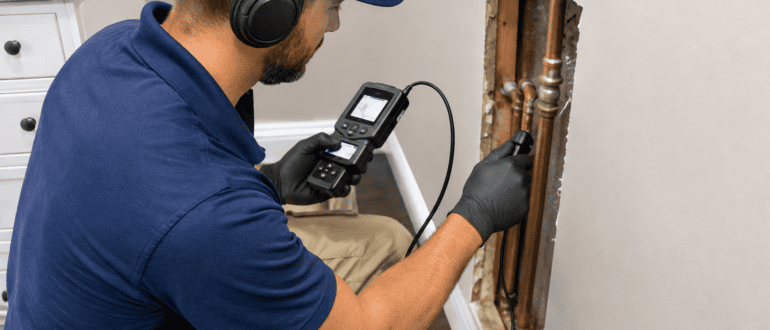
A dripping faucet is easy to notice. You hear it, see it, and usually know exactly where the problem is coming from. But not every plumbing leak makes itself obvious. Water can escape behind drywall, underneath flooring, inside cabinets, or around plumbing connections for quite some time before you realize something is wrong.
That is what makes a hidden plumbing leak such a concern for homeowners. The first indication may not be a puddle of water. Instead, you might notice an unusually high water bill, a musty smell, discoloration on a wall, or flooring that suddenly feels different under your feet.
These signs should not be ignored. Even a relatively small leak can waste water and potentially damage surrounding building materials over time. The U.S. Environmental Protection Agency (EPA) reports that average household leaks can waste more than 9,300 gallons of water annually.
At Plumbing Experts, we regularly deal with plumbing leaks and other problems that are not always obvious to homeowners. Knowing what to look for can help you recognize trouble earlier and determine when it is time to bring in a professional.
Why Hidden Plumbing Leaks Can Be Difficult to Find
Your home’s plumbing system runs through areas you rarely see. Water supply pipes may travel through walls, ceilings, cabinets, floors, and other concealed spaces before reaching faucets, toilets, showers, and appliances.
When a pipe or connection begins leaking in one of these locations, the water does not necessarily appear directly below the damaged area. It may travel along a pipe, framing member, or other surface before becoming visible somewhere else.
That means a water stain on the ceiling does not always tell you exactly where the leak started.
Some leaks are also extremely slow. Instead of releasing enough water to create an obvious puddle, they introduce a small but steady amount of moisture into surrounding materials. By the time the problem becomes visible, the leak may have existed for a while.
Plumbing Experts provides professional leak detection services for homeowners dealing with suspected plumbing leaks. The company specializes in kitchen and bathroom clogs and leaks and serves customers throughout Broward, Palm Beach, and Martin counties.
1. Your Water Bill Suddenly Goes Up
One of the easiest warning signs to overlook is an unexpected increase in your water bill.
Water usage naturally changes from month to month. You may have guests staying at your house, doing more laundry than usual, filling a pool, water landscaping, or simply using more water during a particular season.
But when your daily habits have stayed roughly the same and your water consumption suddenly rises, it deserves attention.
A leaking pipe, toilet, fixture, or plumbing connection can continuously use water without anyone in the household realizing it. Because the leak may be hidden, the utility bill sometimes becomes the first measurable indication of the problem.
The EPA recommends comparing water bills and checking for unexplained increases that could indicate an unidentified leak.
Instead of looking at just one bill, compare several months of usage. A consistent upward trend without an obvious explanation is a good reason to investigate further.
2. Your Water Meter Keeps Moving
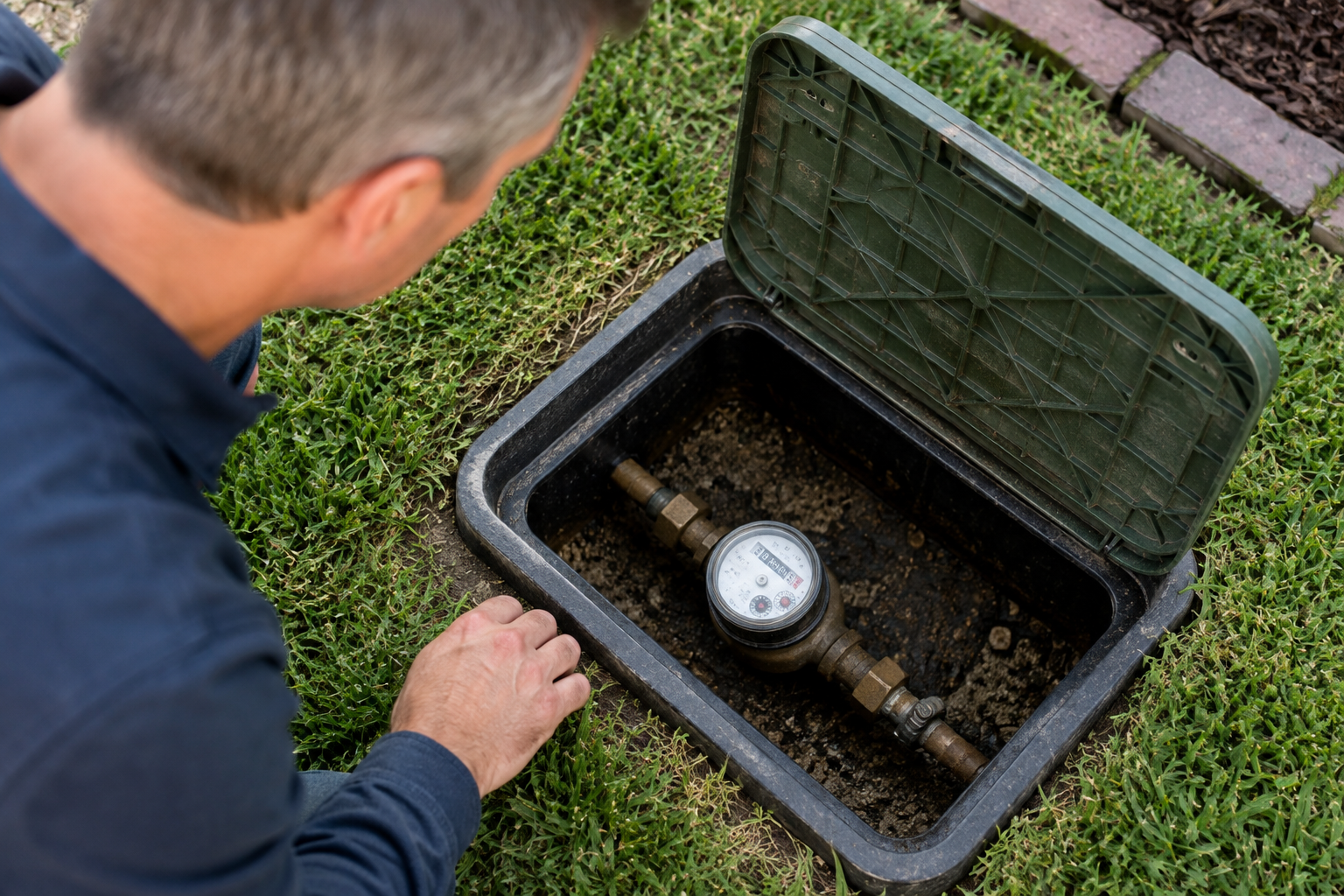
Your water meter can be surprisingly helpful when you suspect a leak.
Choose a time when nobody needs to use water. Turn off faucets, washing machines, dishwashers, irrigation systems, and other water-using fixtures or appliances. Make a note of the meter reading and avoid using water for a period of time.
According to the EPA’s WaterSense leak-checking guidance, homeowners can check the water meter before and after a two-hour period when no water is being used. If the meter changes, there is a good chance water is escaping somewhere in the system.
A moving meter does not tell you where the problem is located, but it can provide an important clue that further investigation is needed.
3. You Notice Stains on Walls or Ceilings
Discoloration is another classic warning sign.
A hidden leak may eventually create yellow, brown, or darker patches on drywall and ceilings. Paint can also bubble, peel, or become discolored when moisture collects behind it.
The location of the stain can provide clues, but do not assume the pipe immediately behind that spot is necessarily the source. Water can travel before it becomes visible.
Pay particular attention to changes near bathrooms, kitchens, laundry areas, and rooms located underneath bathrooms on a second floor.
A stain that continues growing, feels damp, or returns after being painted over should be investigated rather than covered up cosmetically.
4. You Smell a Persistent Musty Odor
Sometimes you smell a moisture problem before you see one.
A persistent damp or musty odor may indicate that moisture is collecting somewhere it should not be. If cleaning and ventilation do not eliminate the smell, it is worth considering whether water is getting behind a wall, beneath flooring, or inside a cabinet.
Look carefully around sinks, toilets, tubs, showers, water heaters, and other plumbing fixtures.
The important word here is persistent. A temporary bathroom odor after a shower is different from a musty smell that repeatedly returns or becomes stronger over time.
5. Flooring Begins to Change
Water beneath flooring can cause changes that homeowners may initially blame on age or normal wear.
Depending on the flooring material, you might notice tiles becoming loose, laminate beginning to swell, wood starting to warp, or sections of flooring feeling unusually soft.
These changes are especially worth investigating when they occur near plumbing fixtures or water-using appliances.
You should not have to wait until water appears on top of the floor. Unexpected changes in flooring can sometimes be an early indication that moisture is present underneath.
6. Water Pressure Has Changed
Low water pressure can have several possible causes, so it does not automatically mean there is a leak. However, a noticeable and unexplained change deserves attention, particularly when it happens alongside other warning signs.
For example, if you notice reduced water pressure along with increasing water usage or unexplained dampness, a plumbing professional should evaluate the system.
The goal is not to diagnose the entire plumbing system yourself. Instead, look at the bigger picture. Several unusual symptoms appearing together can provide a much stronger indication of a problem than any single symptom by itself.
7. You Hear Water When Everything Is Off
Homes make noises, and plumbing systems are no exception. But you should become familiar with what is normal for your house.
If you hear dripping, trickling, or running water when faucets and appliances are turned off, try to determine where the sound is strongest.
A sound inside a wall or underneath a floor should not be dismissed simply because you cannot see water.
Listen when the house is quiet, particularly at night. If you consistently hear water movement without an obvious source, professional leak detection may be the safest next step.
Where Do Hidden Leaks Commonly Develop?
Leaks can occur almost anywhere plumbing is present, but certain locations deserve extra attention.
Check underneath kitchen and bathroom sinks, around toilets, near tubs and showers, around water heaters, and near appliances connected to water lines. Pipe joints, valves, faucet connections, and supply lines are also common places to investigate.
Plumbing Experts explains that plumbing systems contain pressurized water-service lines as well as periodic sewer lines, which means different types of plumbing failures can produce different symptoms.
Problems involving drains and sewer pipes may also require a different diagnostic approach. When recurring backups or drainage problems suggest an issue deeper inside the system, a video sewer inspection can help evaluate sewer piping that cannot be visually inspected from the outside.
Can You Check for a Leak Yourself?
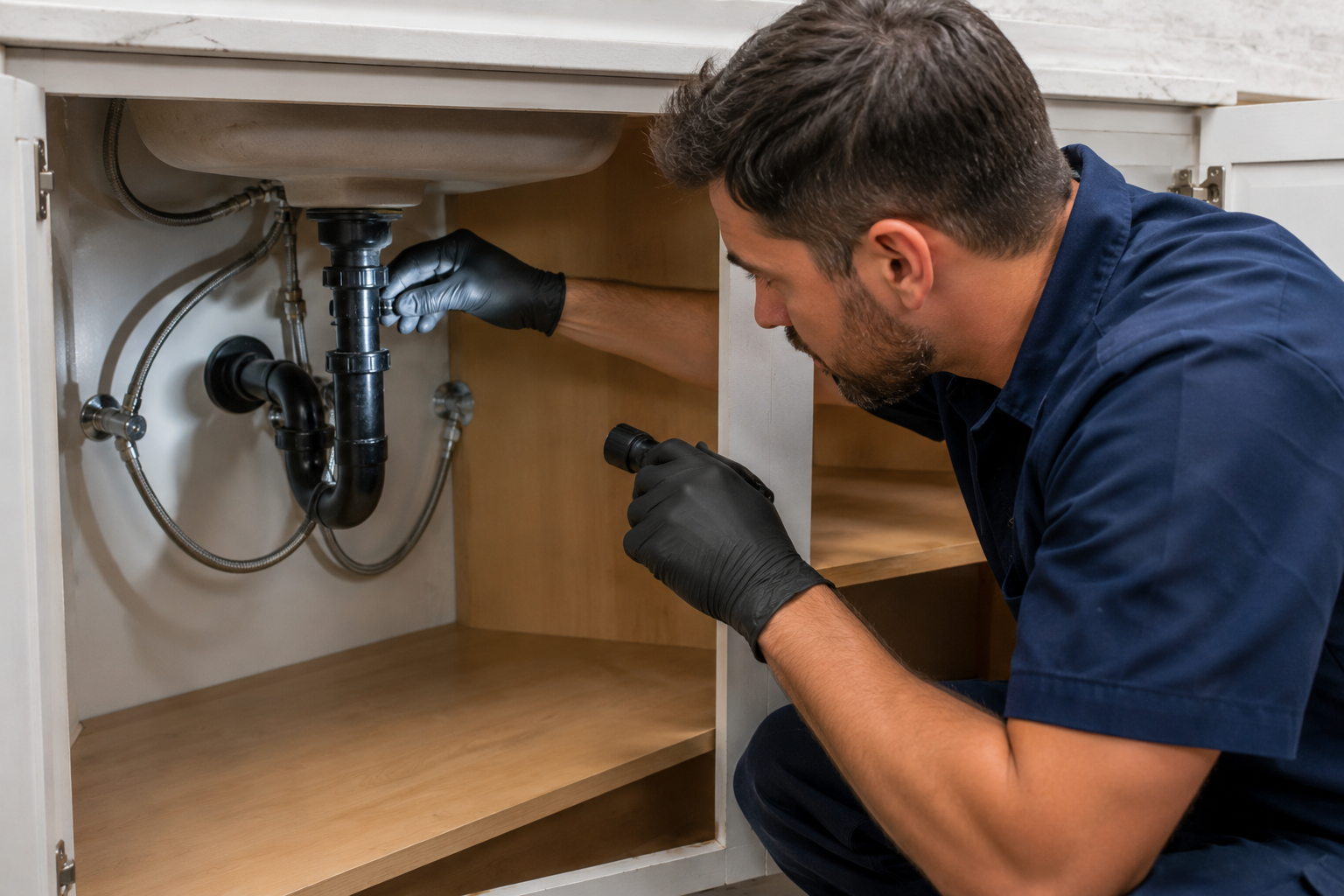
There are several useful checks homeowners can perform without opening walls or floors.
Start by inspecting exposed pipes and connections underneath sinks. Look around toilets, showers, tubs, water heaters, and appliances for moisture. Compare recent water bills and perform the water-meter test described earlier.
You can also check toilets for silent leaks. EPA WaterSense recommends placing a few drops of food coloring into the toilet tank and waiting about 10 minutes. If color appears in the bowl without flushing, the toilet is leaking. Flush afterward to prevent staining.
These checks can help narrow down the problem, but avoid cutting into drywall or flooring simply to search for a leak. When the source is concealed, professional diagnosis can prevent unnecessary damage to your home.
Why Small Leaks Shouldn’t Be Ignored
It is tempting to postpone a plumbing repair when the leak seems minor, particularly if the water is not interfering with everyday life.
The problem is that water loss adds up.
EPA WaterSense notes that fixing easily corrected household leaks can save homeowners about 10 percent on their water bills. The agency also reports that a faucet dripping at one drip per second can waste more than 3,000 gallons per year.
Beyond water waste, ongoing moisture can affect drywall, cabinetry, flooring, and other materials surrounding the plumbing.
Addressing the source early is generally much easier than waiting until visible damage becomes extensive.
When Should You Call a Professional Plumber?
You do not necessarily need a plumber for every drop of water you find. A loose faucet connection, for example, may have an obvious source.
The situation changes when you know water is being lost but cannot determine where it is coming from.
Consider professional help when water-meter readings indicate unexplained usage, stains continue spreading, flooring changes, water pressure unexpectedly drops, or you repeatedly hear running water inside a wall.
You should also call quickly when water is actively damaging your property.
Professional leak detection is intended to identify the source of the problem so the appropriate repair can be made rather than relying on guesswork.
If the problem turns out to involve a fixture rather than a concealed pipe, Plumbing Experts also provides services including faucet repair and plumbing services, toilet repair, sink repair, clogs and stoppages, sewer camera inspections, and other residential plumbing solutions.
Don’t Let a Hidden Leak Become a Bigger Problem
A hidden plumbing leak rarely announces itself in an obvious way. More often, your home gives you smaller clues: a higher water bill, a meter that continues moving, a stain that was not there last month, an unusual odor, a change in flooring, or the faint sound of water behind a wall.
Paying attention to those changes can help you act before the problem becomes more disruptive.
If you suspect a hidden plumbing leak in your South Florida home, Plumbing Experts can help locate the source and determine the appropriate plumbing repair. Plumbing Experts is a Florida-licensed and insured plumbing company serving Broward, Palm Beach, and Martin counties and reports having served more than 100,000 customers.
Schedule Leak Detection With Plumbing Experts
Don’t wait for a small leak to turn into a larger plumbing problem. Contact Plumbing Experts today to schedule professional leak detection or plumbing service. Their team serves homeowners from Fort Lauderdale and Delray Beach to West Palm Beach and Stuart.