




The supply lines underneath your sinks probably aren’t something you think about very often. You turn on the faucet, water comes out, and everything seems fine. But tucked away inside the cabinet are small water lines doing an important job every single day: carrying pressurized hot and cold water from your plumbing system to your faucet.
Because they’re mostly out of sight, supply lines can be easy to overlook until there’s a leak.
At The Plumbing Experts, we regularly deal with kitchen and bathroom plumbing problems throughout South Florida. Our licensed and insured plumbers specialize in repairing kitchen and bathroom clogs and leaks, along with services such as sink repair, leak detection, plumbing inspections, and pipe repair.
So, how often should you replace the supply lines under your sinks? There isn’t one expiration date that applies to every home. The material, age, water conditions, installation quality, corrosion, and visible wear all matter. Instead of waiting for a supply line to fail, homeowners should inspect these connections regularly and replace questionable or aging lines proactively.
Let’s look at what you should know.
What Are the Supply Lines Under Your Sink?
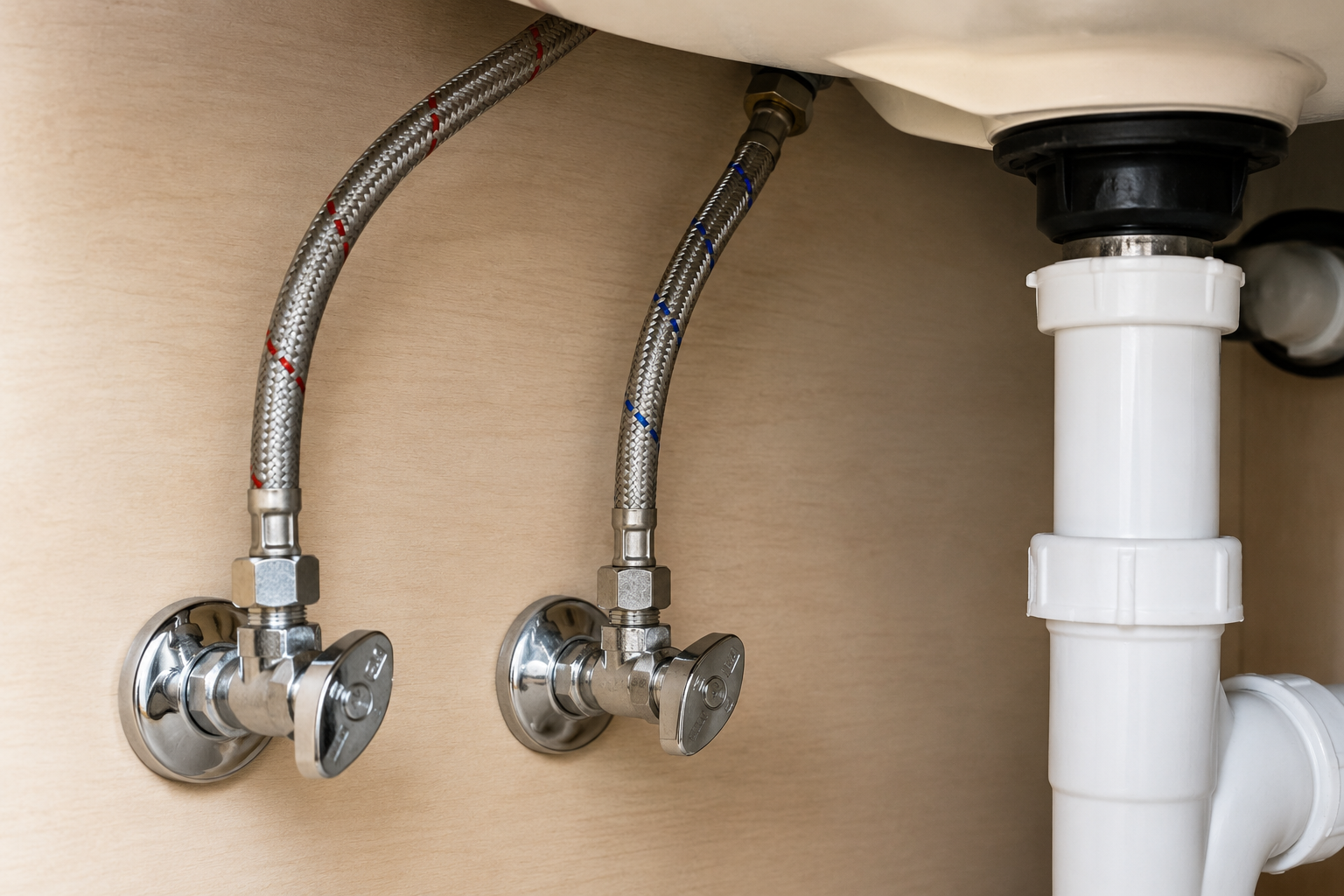
Look underneath your kitchen or bathroom sink and you’ll usually see two smaller lines running between the shutoff valves and the faucet. One carries cold water and the other carries hot water.
These lines are part of the pressurized side of your plumbing system, delivering hot and cold potable water directly to faucets and other fixtures throughout your home. Keeping these connections in good condition can also help prevent issues that may eventually require professional leak detection service.
That pressure is why a failed supply connection deserves attention. A drainpipe usually carries water only while you’re using the sink. A faucet supply line, however, can remain under water pressure even when the faucet is off.
A tiny deterioration can therefore turn into a steady leak—or, in some cases, a more significant release of water.
How Often Should You Replace Sink Supply Lines?
There is no universal schedule that says every sink supply line must be replaced after an exact number of years. Different materials and installation conditions age differently.
A better approach is to combine regular inspection with preventive replacement.
Check the lines at least periodically as part of your normal home maintenance and anytime you’re already working on the faucet or shutoff valves. The U.S. Environmental Protection Agency’s WaterSense maintenance guidance recommends checking the home for leaks at least annually and repairing leaks promptly.
If a line shows corrosion, cracking, bulging, fraying, mineral buildup, damaged fittings, or moisture around its connections, don’t wait for a particular anniversary. Have it evaluated and replaced.
Similarly, if you don’t know how old the supply lines are—especially in an older home—it may make sense to have a plumber inspect them.
A professional plumbing inspection can identify exposed pipes and connections showing leaks, damage, or corrosion before those issues become more serious. Our inspections also look at water pressure, drainage, and other indications of plumbing problems.
Why Supply Lines Eventually Wear Out
Sink supply lines may look simple, but they work constantly. Even when nobody is using the faucet, the water supply side of the plumbing system remains pressurized.
Over time, several factors can affect a supply line.
Corrosion
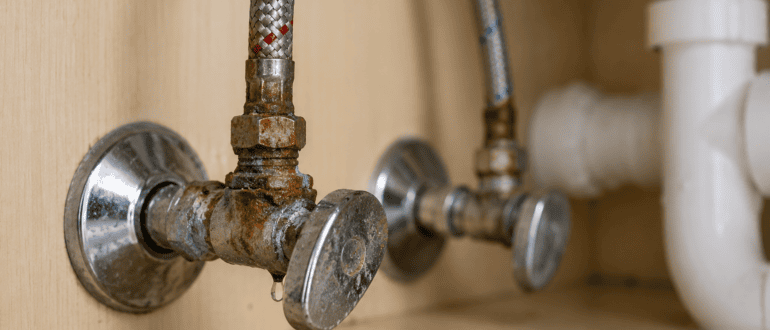
Metal fittings and certain supply-line materials can corrode. In South Florida’s humid environment, it’s particularly worthwhile to keep an eye on metal plumbing connections hidden inside cabinets.
Corrosion isn’t always dramatic. You may first notice discoloration, rust, greenish deposits, or white mineral buildup around a connection.
Our plumbers specifically look for rust stains and green or white discoloration around metal fittings during plumbing inspections because corrosion can contribute to weakened or compromised connections.
Age and Normal Wear
Every plumbing component experiences wear eventually. Flexible supply lines may deteriorate, fittings can weaken, seals can lose effectiveness, and older materials may no longer provide the reliability you’d expect from a newer connection.
Age alone doesn’t automatically mean failure is imminent, but an older line deserves closer attention.
Water Pressure
Excessive or irregular water pressure can place additional stress on plumbing components.
The EPA notes that leaks can be caused by several factors, including old piping or plumbing fixtures, corrosion, irregular water pressure, equipment problems, and incorrect installation.
If you’re experiencing unusually high or low pressure at several fixtures, that’s another reason to have your plumbing checked rather than simply focusing on the faucet.
Poor Installation
A supply line that was twisted, overtightened, stretched too tightly, incorrectly sized, or poorly connected may develop problems sooner.
Supply lines shouldn’t be sharply kinked or placed under unnecessary tension. Connections also need to be properly installed and secured.
7 Signs It’s Time to Replace a Sink Supply Line
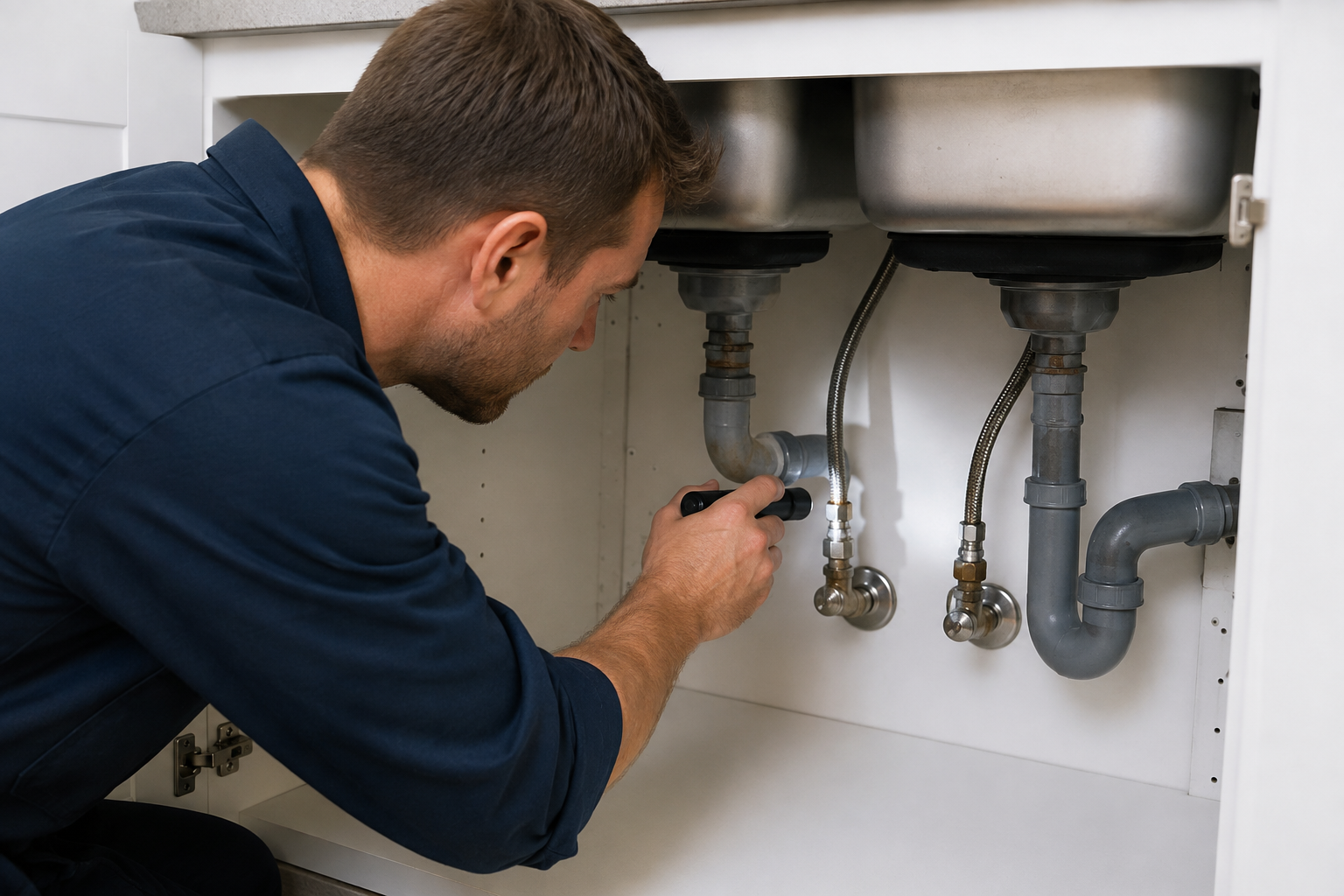
You don’t need to be a plumber to spot many of the warning signs of a deteriorating supply line. Open the cabinet doors, use a flashlight, and take a careful look.
1. Water Under the Sink
Water in the cabinet is the most obvious warning sign.
Don’t automatically assume the drain is responsible. Moisture can come from the faucet, supply-line connections, shutoff valves, drain assembly, garbage disposal, or other nearby plumbing.
Dry the area and look for where new moisture appears. If you’re unable to determine the source, professional leak detection can help identify the problem.
2. Corrosion Around the Connections
Look at both ends of each line.
Rust, green discoloration, white deposits, or significant mineral buildup shouldn’t simply be ignored. These signs can indicate ongoing moisture or deterioration around the fitting.
3. Cracks or Fraying
Inspect flexible lines carefully.
If the outer material looks cracked, split, frayed, or otherwise damaged, replacement is generally safer than trying to get more life out of a visibly deteriorated component.
4. Bulging
A line that appears swollen, misshapen, or bulged deserves immediate attention.
Remember, the line is holding pressurized water. Visible deformation isn’t something to monitor indefinitely.
5. Dripping at the Connection
Even an occasional drip matters.
The EPA identifies hot and cold water connection hoses and valves at kitchen and bathroom faucets as potential locations for household leaks.
A connection that repeatedly becomes wet should be inspected and repaired rather than simply wiped dry.
6. Unknown Age
Maybe you recently purchased an older home and have no idea when the plumbing connections were last replaced.
That’s a good opportunity for an inspection.
Knowing the condition of exposed plumbing components can help you prioritize maintenance instead of discovering problems through an unexpected leak.
7. You’re Replacing the Faucet Anyway
If you’re already installing a new kitchen or bathroom faucet, it’s an ideal time to inspect the supply lines and shutoff valves.
Instead of automatically reconnecting old, questionable lines to a brand-new fixture, ask whether replacement makes sense while everything is already accessible.
Why a Small Supply-Line Leak Can Become a Big Problem
It’s easy to underestimate a tiny drip underneath the sink.
Maybe there’s only a little moisture at the fitting. Maybe the bottom of the cabinet feels damp once in a while. The temptation is to put a towel underneath it and deal with it later.
That isn’t a great long-term strategy.
Persistent moisture can damage cabinetry and surrounding materials. More importantly, a deteriorating pressurized connection may worsen.
Household plumbing leaks also waste a surprising amount of water. EPA WaterSense says an average household’s leaks can account for nearly 10,000 gallons of wasted water each year.
You can learn more about finding and preventing household water leaks through the EPA’s WaterSense leak resources. This is a helpful non-commercial resource for homeowners interested in reducing water waste.
The important point is simple: small plumbing leaks deserve attention.
Should You Replace Both Hot and Cold Supply Lines Together?
In many situations, it’s worth considering.
If the hot and cold supply lines were installed at the same time and one has deteriorated because of age or general wear, the other line has been exposed to similar conditions for roughly the same amount of time.
That doesn’t necessarily mean both are damaged. However, replacing only one very old line while leaving another line of the same age in place may mean dealing with a second repair later.
Have both inspected and made the decision based on their condition.
Can You Replace a Sink Supply Line Yourself?
Some experienced homeowners are comfortable with straightforward plumbing maintenance. However, what appears to be a simple supply-line replacement can uncover additional problems.
For example, the shutoff valve may not close properly. The fitting may be badly corroded. An older valve could begin leaking when disturbed. There may also be uncertainty about the correct line, connection, or installation method.
If you’re uncomfortable working with pressurized plumbing—or the valve or fittings look damaged—calling a licensed plumber is the safer option.
The EPA also emphasizes ensuring tight connections to hoses and valves serving plumbing fixtures and appliances.
Professional installation provides the opportunity to inspect the surrounding plumbing at the same time.
Make Under-Sink Inspections Part of Your Routine
You don’t need to wait for a leak to inspect the area underneath your sinks.
Every so often, remove the cleaning products, trash bags, and other items that tend to accumulate in the cabinet. Look closely at the supply lines, valves, drain connections, and cabinet floor.
Run both hot and cold water while you’re looking underneath.
Feel around the connections with a dry paper towel. Even a tiny amount of moisture becomes easier to spot that way.
It’s also smart to know where your sink’s shutoff valves are and where the home’s main water shutoff is located. If a plumbing line ever develops a serious leak, knowing how to stop the water quickly can help limit damage.
For broader guidance on conserving water and maintaining plumbing fixtures, homeowners can also explore the EPA’s WaterSense program, which provides resources for identifying leaks and improving household water efficiency.
Don’t Wait for a Supply Line to Fail
So, how often should you replace the supply lines under your sinks?
Rather than relying on one fixed number of years, pay attention to age, material, installation, corrosion, moisture, physical damage, and overall condition. Inspect the connections regularly, and if you see signs of deterioration—or simply don’t know how old they are—have them evaluated.
Being proactive is much easier than discovering a failed connection after water has spread through the cabinet or onto the floor.
At The Plumbing Experts, we provide professional sink repair, plumbing inspections, leak detection, pipe repairs, and other residential plumbing services throughout Palm Beach, Broward, and Martin counties. Our team has served more than 100,000 customers, and we’re fully licensed and insured in Florida.
Need Help With a Leaking or Aging Sink Supply Line?
If you’ve noticed moisture, corrosion, damaged connections, or another warning sign underneath your sink, don’t wait for the problem to get worse. Contact The Plumbing Experts today to have your plumbing inspected and repaired by an experienced professional.
Visit our website to contact The Plumbing Experts to request service, or call:
Palm Beach County: 561-279-2460
Broward County: 954-786-0477
Martin County: 772-647-7946